How to Make Reggaeton Beats: The Dembow Rhythm
Make reggaeton beats with the dembow rhythm: tempo, kick and snare pattern, percussion, bass, melodies and the modern production touches that make it hit.

Reggaeton is one of the most listened-to genres in the world, and almost all of it is built on one rhythm: the dembow. Once you can program it and know how to dress it up, you can make anything from classic perreo to modern, moody Latin pop.
Tempo
Reggaeton usually sits around 88–100 BPM, with many modern hits close to 90–95 BPM. Some producers work at double that tempo in the DAW; the feel is the same.
The dembow rhythm
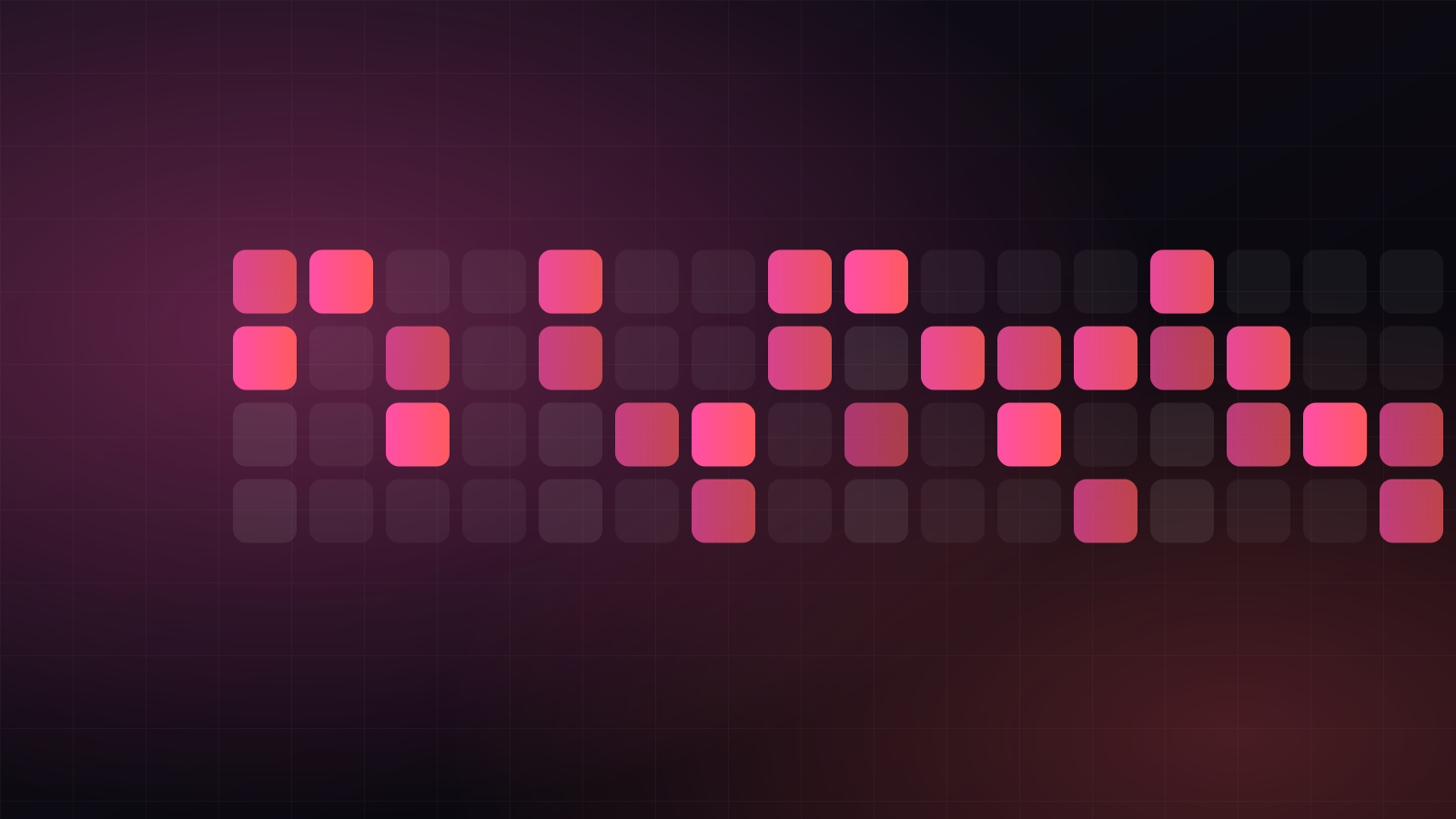
In one bar of four beats, with sixteenth-note steps numbered 1 to 16:
- Kick: on every beat — steps 1, 5, 9 and 13. A steady four-on-the-floor.
- Snare: on steps 4, 7, 12 and 15. This “boom-ch-boom-chick” pattern is the dembow.
That syncopated snare against the steady kick is the entire engine of the genre. Program it first, loop it, and everything else is built on top.
Percussion
- Hi-hats: eighths or sixteenths, often with open hats on the off-beats.
- Rimshots and claps: layered with the snare for snap.
- Timbales, shakers and congas: add Latin flavour and movement. Small fills at the end of every four or eight bars keep it lively.
Bass
Modern reggaeton uses 808s or deep sub bass. Keep the bass rhythm simple and locked to the kick, following the chord roots. A slight saturation helps it translate on phones. Make sure the kick and bass do not clash — our 808 and kick layering guide explains tuning and sidechain.
Chords and melody
Reggaeton favours minor keys and simple, repeating progressions — four chords looping for the whole song is normal. Plucks, pianos, guitars, flutes and synth leads all work. Modern tracks often borrow from R&B and trap, with dark, atmospheric pads. For progressions that work, see chord progressions for beats, and for catchy toplines, melodies that stick.
Leave room for the vocal
Reggaeton is a vocal genre. Keep the arrangement simple under verses, and save bigger elements for the hook. Leave the 1–4 kHz range relatively clear where the voice sits. If you are writing for vocalists, a short, catchy hook matters more than complex production — our hook writing guide helps.
Modern production touches
- Drops and stops: cut everything except the vocal for a beat before the hook.
- Reverse effects and risers into each section.
- Filtered intros that open up as the beat comes in.
- Variations in the dembow: drop the kick on some beats, or add extra snare hits in the last bar of a phrase.
Mixing
Keep the kick punchy and the snare bright and forward — the dembow must cut through. Sidechain the bass lightly to the kick. Reggaeton masters are loud but clean; aim for a punchy, controlled low end and check the result with a loudness checker.
Get a fresh beat idea →Stuck on where to take the dembow? Generate a direction to start from.Frequently asked questions
What BPM is reggaeton?
Usually around 88–100 BPM, with many modern songs near 90–95 BPM.
What is the dembow rhythm?
A steady kick on every beat with a syncopated snare on the fourth, seventh, twelfth and fifteenth sixteenth notes of the bar.
What key is reggaeton usually in?
Most reggaeton is in a minor key, with simple four-chord progressions that loop throughout the song.
Want to try it on your own track? See all the free music tools — no account needed.